
What is API Integration and How Does It Save Malaysian Businesses Time and Money?
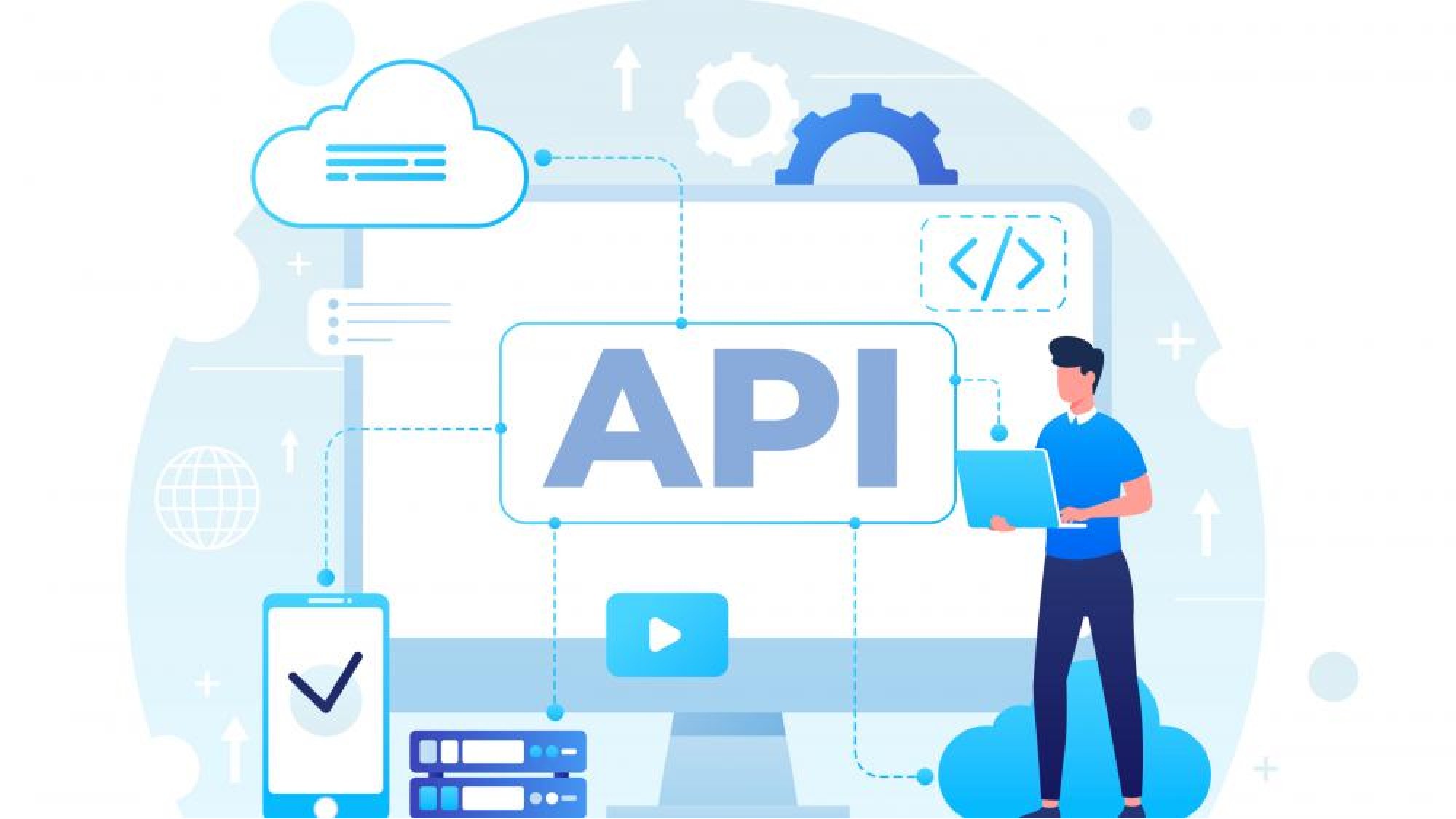
API integration connects separate software systems so they can share data automatically — without manual export, copy-paste, or re-entry. For Malaysian businesses running ERP, accounting software, eCommerce, and CRM as separate platforms, API integration eliminates the gaps between those systems and the hours of manual work spent bridging them every day.
At Searchneasy, API integration is one of the most consistently impactful services we deliver for Malaysian businesses. The moment a business stops re-entering the same data in multiple systems, it gets back time, accuracy, and visibility that compound into real competitive advantage.
What is an API?
API stands for Application Programming Interface. In plain terms, an API is a standardised connection point that software systems use to communicate with each other.
Think of it like a waiter at a restaurant. You (one software system) tell the waiter (the API) what you need. The waiter goes to the kitchen (the other software system), collects exactly what was requested, and brings it back to you in the right format. Neither you nor the kitchen needs to know how the other operates — the waiter handles the translation and delivery.
In a business context: when your eCommerce platform receives a new order, the API sends that order information — customer details, product, quantity, shipping address — directly to your ERP system in the format it expects. No one types anything. No one copies anything. It happens automatically, in real time.
What is API Integration and How Does It Work?
API integration is the process of connecting two or more software systems using their APIs so that data moves between them automatically based on defined triggers and rules.
A simple example: your WebCart online store and EasyERP. Without integration, when a customer places an order on WebCart, someone on your team must manually log into EasyERP and create the corresponding sales order. With API integration, the moment the order is confirmed on WebCart, it automatically appears in EasyERP as a sales order — with all fields correctly populated, inventory allocated, and the invoice generation process triggered. The human step is removed entirely.
The same principle applies to any two systems that currently require a human to carry information from one to the other.
Which Business Systems Can Be Connected via API?
Malaysian businesses benefit from API integration across a wide range of system combinations. These are the most common and impactful connections Searchneasy delivers:
ERP and eCommerce. Online orders flow directly into EasyERP as sales orders. Inventory levels on your WebCart store update in real time as stock is adjusted in EasyERP. Invoices are generated and submitted to LHDN MyInvois automatically for every online transaction.
ERP and CRM. When a deal closes in EasyCRM, it flows into EasyERP as a sales order without re-entry. Customer data stays consistent across both systems. Payment status in EasyERP is visible in EasyCRM against the customer record — giving sales teams real-time financial visibility without asking finance.
ERP and accounting software. For businesses using SQL Accounting or AutoCount alongside ERP, API integration synchronises financial transactions so that records in both systems stay consistent without double posting.
ERP and LHDN MyInvois. This is the API integration that underlies Malaysia's e-invoicing compliance requirement. EasyERP connected to MyInvois via API means every invoice is submitted, validated, and returned with a compliance reference number automatically — without anyone logging into the portal. Explore E-Invoicing Integration for more detail on this specific connection.
eCommerce and payment gateways. Payment confirmation from your payment gateway updates order status and triggers fulfilment in your eCommerce and ERP systems simultaneously — without a staff member manually checking and updating each transaction.
CRM and WhatsApp or email platforms. Conversations with customers on WhatsApp or email are captured automatically in EasyCRM against the relevant customer record — so the full communication history is always in the CRM, not scattered across individual phones.
ERP and logistics platforms. When a shipment is created, the tracking number flows back into EasyERP and can be sent automatically to the customer — without anyone manually copying the tracking number from the logistics portal.
ERP and marketplace platforms. Orders from Shopee or Lazada flow into EasyERP alongside your own website orders, giving you consolidated inventory management and unified financial reporting across all your sales channels.
What Problems Does API Integration Solve for Malaysian SMEs?
The problems that API integration solves are the daily frustrations that most operations and finance teams in Malaysian businesses accept as normal — until they discover they do not have to be.
Double data entry. Entering the same order, customer record, or invoice in two different systems is the most common waste of time in growing businesses. API integration makes the second entry unnecessary — the first entry triggers the rest automatically.
Inconsistent data between systems. When staff manually transfer data between systems, discrepancies accumulate. A quantity updated in one system but not another. A price change reflected in ERP but not on the website. A customer address updated in CRM but not in the billing system. API integration keeps all systems synchronised in real time from a single authoritative source.
Delayed reporting. When data has to be manually consolidated from multiple systems before a report can be produced, management is always looking at yesterday's picture. With integrated systems, management reporting is always live.
E-invoicing submission errors. Manual entry into the MyInvois portal introduces human error at every submission — wrong TIN numbers, missing fields, incorrect classification codes. API integration with MyInvois submits invoices directly from your ERP in the exact format LHDN requires, eliminating the error source entirely.
Operations slowing as volume grows. Manual processes that work at 20 orders per day break down at 200 orders per day. API integration means your operational capacity scales with your sales volume, not with your headcount.
How Much Does API Integration Cost in Malaysia?
API integration project costs in Malaysia typically range from RM5,000 to RM50,000 or more, depending on:
- The number of systems being connected
- The complexity of data flows and business rules required
- Whether the systems have well-documented, accessible APIs or require custom connector development
- The volume of historical data to be synchronised
- The ongoing support and monitoring scope required
Simple integrations — such as connecting a WebCart store to EasyERP for order sync — are at the lower end of the range and can often be completed within 2 to 4 weeks. More complex multi-system integration projects — connecting ERP, CRM, accounting, eCommerce, and e-invoicing simultaneously — take 1 to 3 months and sit at the higher end of the cost range.
How Searchneasy Delivers API Integration for Malaysian Businesses
Searchneasy's API Integration and System Integration services follow a proven 6-step delivery process designed to minimise disruption and maximise long-term reliability.
Integration assessment. We begin by understanding your current systems, workflows, data volumes, and business objectives — before writing a single line of integration code.
Architecture design. We design the integration flows: which systems connect, which data moves in which direction, how conflicts are resolved, and how errors are caught and alerted.
Development and configuration. We build and configure the API connections, middleware layers, and custom connectors required for your specific system combination.
Testing and validation. Every integration is tested thoroughly using realistic data volumes and business scenarios before any live traffic flows through it.
Deployment and go-live. We manage a controlled cutover to live integration, with active monitoring during the initial period to confirm everything is working as designed.
Ongoing support and optimisation. As your systems evolve — new versions, new modules, new platforms — Searchneasy maintains and optimises the integration to keep it accurate and reliable.
Frequently Asked Questions
What is API integration in simple terms?
API integration allows two or more software systems to communicate automatically so that data moves between them without manual work. When a new order is placed in your online store, API integration can automatically create that order in your ERP, update inventory, and generate an invoice — all without anyone typing anything.
Does my business need API integration?
If your team regularly copies or re-enters data from one system into another — order data, customer records, stock updates, invoices — API integration eliminates that work entirely. Most businesses with three or more software systems in use benefit significantly from API integration.
Can API integration work with my existing systems?
Most modern business software — ERP, CRM, accounting, eCommerce, POS — supports API integration through documented interfaces. Searchneasy specialises in connecting both modern cloud systems and older on-premise platforms using secure, reliable integration methods.
How long does an API integration project take?
Simple integrations connecting two well-documented systems typically take 2 to 4 weeks. More complex projects connecting multiple systems with custom business rules take 1 to 3 months. Searchneasy provides a clear timeline estimate after the initial integration assessment.
Is API integration secure?
When properly implemented, API integrations use secure authentication methods, encrypted data transmission, and access controls that limit what each system can read or write. Searchneasy designs all integrations with data security as a foundational requirement, not an afterthought.
Can API integration support LHDN e-invoicing compliance?
Yes. API integration is the technical backbone of automated e-invoicing compliance. When your ERP is connected to LHDN MyInvois via API, invoices are submitted, validated, and returned with compliance references automatically — without any manual portal access. See our E-Invoicing Integration page for full details.
Ready to Connect Your Business Systems?
If your team is spending time transferring data between systems that should be talking to each other automatically, that time — and the errors it generates — does not need to be part of your operations.
Speak with our integration specialists to map out which connections will deliver the most immediate value for your business.
Book a Free API Integration Consultation →
Searchneasy is a Malaysian digital solutions company with over 20 years of experience delivering ERP, CRM, eCommerce, E-Invoicing, API Integration, and Custom Software solutions. We help businesses across Malaysia digitalise, automate, and grow.