
Why Connecting Your Online Store to ERP Is the Smartest Move for Malaysian eCommerce Businesses
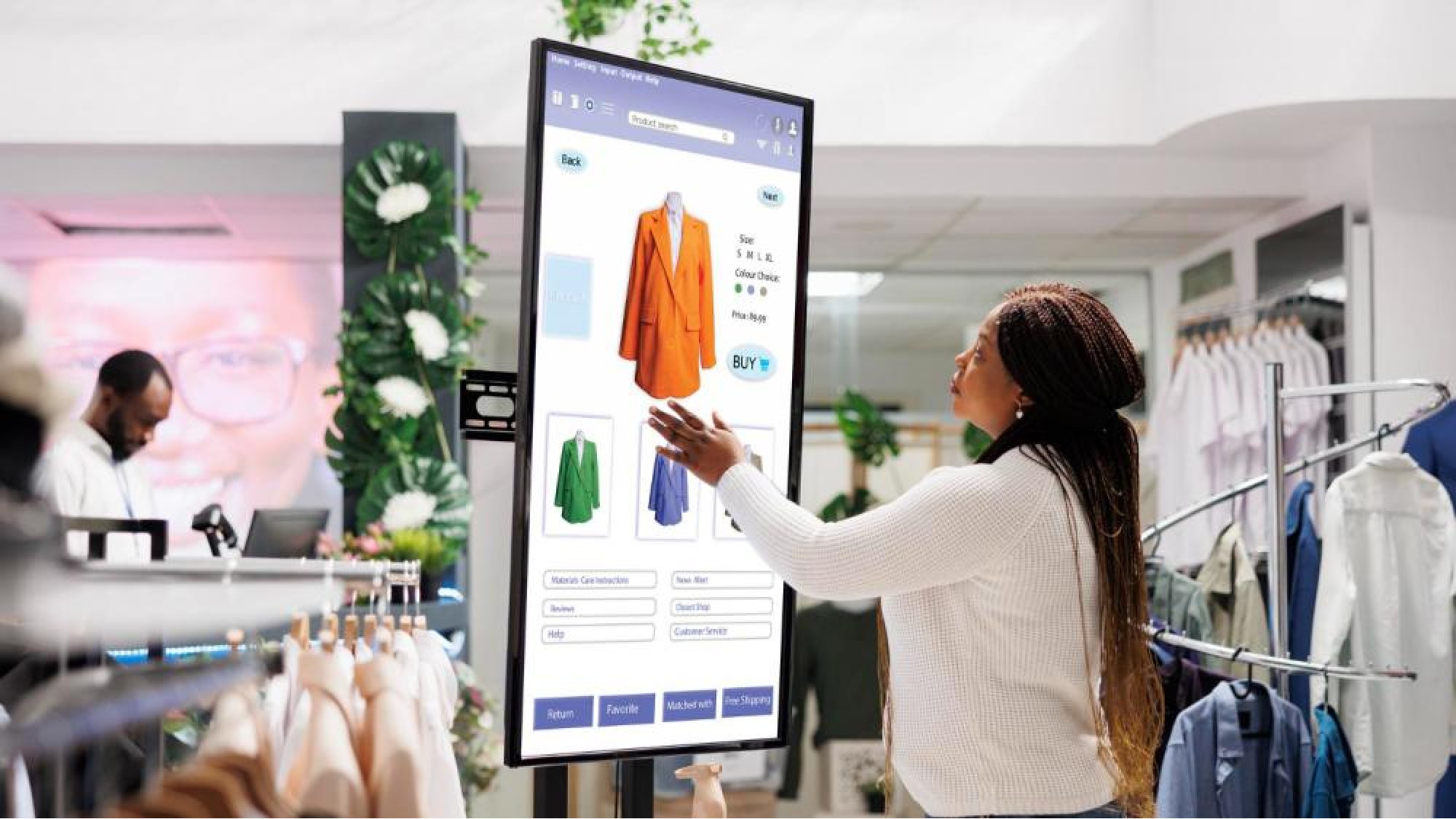
Running an online store without connecting it to your ERP is like driving with the handbrake on. Your orders are moving, your inventory is moving, your finances are moving — but none of them are moving together. Every day, your team manually bridges the gap: copying order data from your online store into your accounting system, updating stock counts by hand, generating invoices from a separate platform, and reconciling numbers that never quite match.
Malaysian eCommerce businesses that integrate their online store with ERP eliminate this friction entirely. Orders, inventory, customers, invoices, and financial records flow between systems automatically. The result is not just operational efficiency — it is real-time visibility into your actual business performance that disconnected systems can never provide.
What Happens When Your Online Store and Back-Office Run Separately?
Before examining the solution, it is worth being specific about what disconnection costs your business every day.
Manual stock updates cause discrepancies and overselling. When your WebCart online store and your inventory system are not connected, someone must manually update stock levels after every order is processed. During high-volume periods — sales campaigns, Hari Raya promotions, year-end clearances — this update falls behind. Customers order products that are already out of stock. Your team spends hours managing the fallout. Overselling damages customer trust in ways that are difficult to recover from.
Order data re-entry into accounting wastes hours and creates errors. Every online order that must be manually typed into your accounting or ERP system is a data entry risk. A wrong quantity, a mistyped price, or a missing line item creates a discrepancy that takes time to trace and correct. For businesses processing 50 or more orders per day, manual re-entry is a significant operational cost with a high and consistent error rate.
Delayed fulfilment because warehouse does not see orders in real time. When orders arrive in your online store but warehouse staff only see them after someone manually transfers the data — often hours later — fulfilment is delayed from the start. In a market where delivery speed is a competitive differentiator, a two to three hour lag between order placement and warehouse action is a disadvantage you are paying for every day.
No real-time profit visibility. Knowing your online revenue is easy — the store dashboard shows it. Knowing your actual profit — after cost of goods, shipping fees, payment gateway charges, returns, and operational overhead — requires combining data from multiple systems. Without integration, this calculation happens once a month at best, and it is always historical by the time management sees it.
Returns and refunds handled manually across two systems. A customer returns an order. Your eCommerce platform needs updating. Inventory needs restocking. Accounting needs a credit note. Without integration, each of these is a separate manual step — and if any one is missed, your records are inaccurate.
What Does eCommerce-ERP Integration Actually Mean?
In plain terms, eCommerce-ERP integration means creating a live, automated data connection between your online store and your ERP system. Data created in one system automatically appears in the other — without anyone manually transferring it.
When WebCart eCommerce is integrated with EasyERP by Searchneasy, the following data flows automatically between the two systems:
From WebCart to EasyERP:
- Every new order becomes a sales order in EasyERP the moment it is placed online
- Customer information synchronises to the EasyERP customer database automatically
- Payment status updates in real time as transactions are confirmed
From EasyERP to WebCart:
- Product catalogue updates — new products, price changes, descriptions — sync to the online store
- Inventory levels on the storefront update the moment stock is adjusted in EasyERP
- Order fulfilment and delivery status flows back to the customer's order tracking on WebCart
Across both systems:
- E-Invoicing compliance is handled automatically — every order triggers a LHDN MyInvois submission through the E-Invoicing System
- Financial records in EasyERP always reflect actual online sales without manual posting
- Reporting in EasyERP includes online sales data alongside all other revenue channels in one view
The connection is made through API integration — a secure, real-time data link between the two platforms. Once configured, it runs automatically in the background with no ongoing manual intervention.
6 Business Outcomes of Connecting WebCart to EasyERP
These are the outcomes Searchneasy's clients consistently report after completing eCommerce-ERP integration.
Outcome 1: Zero stock discrepancies between your online store and warehouse. When EasyERP is the single source of inventory truth and WebCart reflects it in real time, overselling becomes technically impossible. The moment an item is allocated to an order in EasyERP, the available quantity on WebCart updates automatically. Your store only shows what is genuinely available.
Outcome 2: Automatic invoice generation on every online order. Every WebCart order triggers automatic invoice creation in EasyERP, with LHDN MyInvois e-invoicing submission handled simultaneously. Your finance team does not manually generate a single invoice for online sales. For businesses processing significant order volumes, this alone can recover 2 to 4 hours of finance team time per day.
Outcome 3: Real-time sales reporting across all channels. EasyERP consolidates revenue from online, offline, and all other channels into unified financial reporting. Management sees today's revenue, this week's gross margin, and this month's full performance in real time — not at month end after a week of reconciliation.
Outcome 4: Faster fulfilment. When a WebCart order automatically creates a pick instruction in EasyERP's warehouse module, fulfilment begins immediately. For businesses that currently experience a 1 to 3 hour delay between order placement and warehouse action, integration typically reduces this to minutes.
Outcome 5: E-Invoicing compliance on every online transaction. With WebCart integrated with EasyERP and Searchneasy's E-Invoicing Integration, every online order automatically generates a MyInvois-validated invoice. Compliance is built into the transaction workflow — not added as a separate manual process after the fact.
Outcome 6: A complete customer view from first visit to repeat purchase. When WebCart is integrated with both EasyERP and EasyCRM, every customer interaction is captured in one profile — purchase history, payment records, support interactions, and marketing responses. This 360-degree view enables better upselling, smarter retention campaigns, and a consistently stronger customer experience.
Is eCommerce-ERP Integration Only for Large Businesses?
A common assumption is that system integration is only for large enterprises with dedicated IT teams. This is no longer accurate, and the tipping point for integration value arrives much earlier than most Malaysian business owners expect.
The key question is not how large your business is — it is how much time your team currently spends on manual data transfer and correction.
Consider a practical example: a Malaysian online retailer processing 80 orders per day. Without integration, two staff members spend approximately 3 hours daily transferring order data, updating stock counts, and generating invoices. Over a month, that is roughly 120 hours of manual work. At a loaded cost of RM25 per hour, that is RM3,000 per month — RM36,000 per year — spent doing work that an integrated system eliminates entirely.
For any business processing more than 30 to 40 online orders per day, the integration investment typically pays for itself within the first year. For higher-volume operations, often within six months.
Beyond cost recovery, there is the accuracy argument. Every manual data transfer is an opportunity for error. Every error creates a customer service issue, an inventory discrepancy, or a financial reconciliation problem. Integration eliminates the error source — not just the labour cost.
How WebCart + EasyERP Integration Works
The technical connection between WebCart and EasyERP is built using API integration — Searchneasy's standard approach to connecting business systems.
Step 1 — System assessment. Searchneasy reviews your current WebCart configuration, your EasyERP setup, and your business processes to define exactly which data flows need to be connected and in which direction.
Step 2 — Integration design. The integration architecture is designed — which fields map to which, how frequently data syncs, how conflicts are resolved, and how errors are logged and alerted.
Step 3 — API connection and configuration. The technical API connection is built and configured, including authentication, data mapping, error handling, and testing protocols.
Step 4 — Testing with real scenarios. The integration is tested using realistic transaction scenarios — high-volume order processing, partial shipments, returns, refunds, and inventory adjustments — before any live data flows through it.
Step 5 — Go-live and monitoring. The integration goes live in a controlled cutover. Searchneasy monitors the first weeks of live operation to confirm data is flowing correctly and address any edge cases that emerge.
Step 6 — Ongoing support. As your business grows — new product categories, new sales channels, new warehouse locations — the system integration is maintained and expanded to accommodate the changes.
Typical implementation timeline: 2 to 6 weeks depending on the complexity of your existing systems.
Frequently Asked Questions
Can WebCart integrate with ERP systems other than EasyERP?
Yes. WebCart supports API integration with other ERP and accounting systems. However, WebCart and EasyERP together provide the most seamless integration experience because both systems are developed and supported by the same Searchneasy team — meaning the connection is designed from the inside, not bolted on from the outside.
Does integration work with my existing eCommerce platform if I am not using WebCart?
EasyERP supports API integration with multiple eCommerce platforms including Shopify and WooCommerce. Speak with our integration team about your specific platform to confirm scope and timeline.
What happens to existing orders during the integration setup?
Historical order data can be migrated into EasyERP as part of the implementation. All new orders processed after go-live flow automatically. Your existing transaction history remains intact and accessible.
How do I handle multi-channel selling — website plus Shopee or Lazada — with ERP integration?
EasyERP can be connected to multiple sales channels simultaneously through separate API integrations. This means orders from your WebCart store, your Shopee store, and your offline sales can all flow into one ERP with consolidated inventory, reporting, and invoicing.
Is the integration affected when either system receives an update?
Searchneasy monitors and maintains live integrations as part of the ongoing support arrangement. When either WebCart or EasyERP receives a significant update, Searchneasy validates that the integration continues to function correctly and applies any necessary adjustments.
Ready to Connect Your Online Store and ERP?
Running WebCart today, or planning an online store? Speak with our consultants about how WebCart eCommerce and EasyERP can be connected to eliminate manual work, improve stock accuracy, and give you real-time visibility over your online business performance.
Book a Free eCommerce-ERP Consultation →
Searchneasy is a Malaysian digital solutions company with over 20 years of experience delivering ERP, CRM, eCommerce, E-Invoicing, API Integration, and Custom Software solutions. We help businesses across Malaysia digitalise, automate, and grow.